7 Best Ice Axes for Alpine Climbing: Expert Reviews and Top Picks for 2026
Introduction
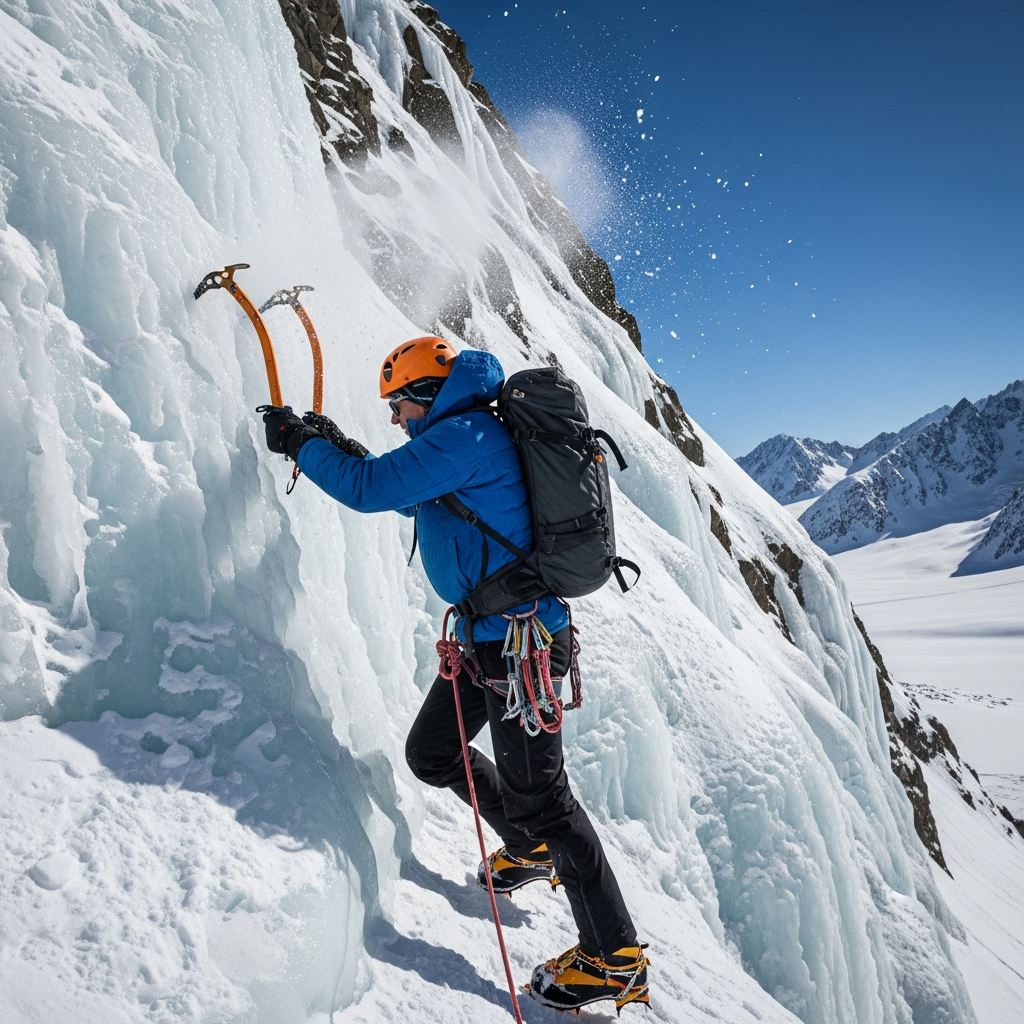
Stepping onto a glaciated peak or tackling a steep couloir requires reliable gear, and a dependable ice axe is central to your upward mobility. For the 2026 climbing season, modern ice tools increasingly bridge the gap between classic walking piolets and technical water-ice tools. Manufacturers are prioritizing lightweight alloys, modular head designs, and ergonomic shafts that reduce fatigue while improving strike precision.
Before stepping onto the ice, recognize that an axe operates as part of a larger system. It must integrate effectively with your crampons, safety lines, and footwear. A precise axe swing relies on stable footwork, which is why pairing a modern tool with proper boots from our guide to the 7 Best Mountaineering Boots for Extreme Cold ensures better overall stability. Similarly, transitioning to high alpine environments often requires an updated harness setup, which you can review in our expert reviews on climbing harnesses.
Analyzing current gear data and alpine testing circuits reveals several standout models engineered for specific mountain conditions and climbing styles.
Top 5 Best Ice Axes for Alpine Climbing in 2026
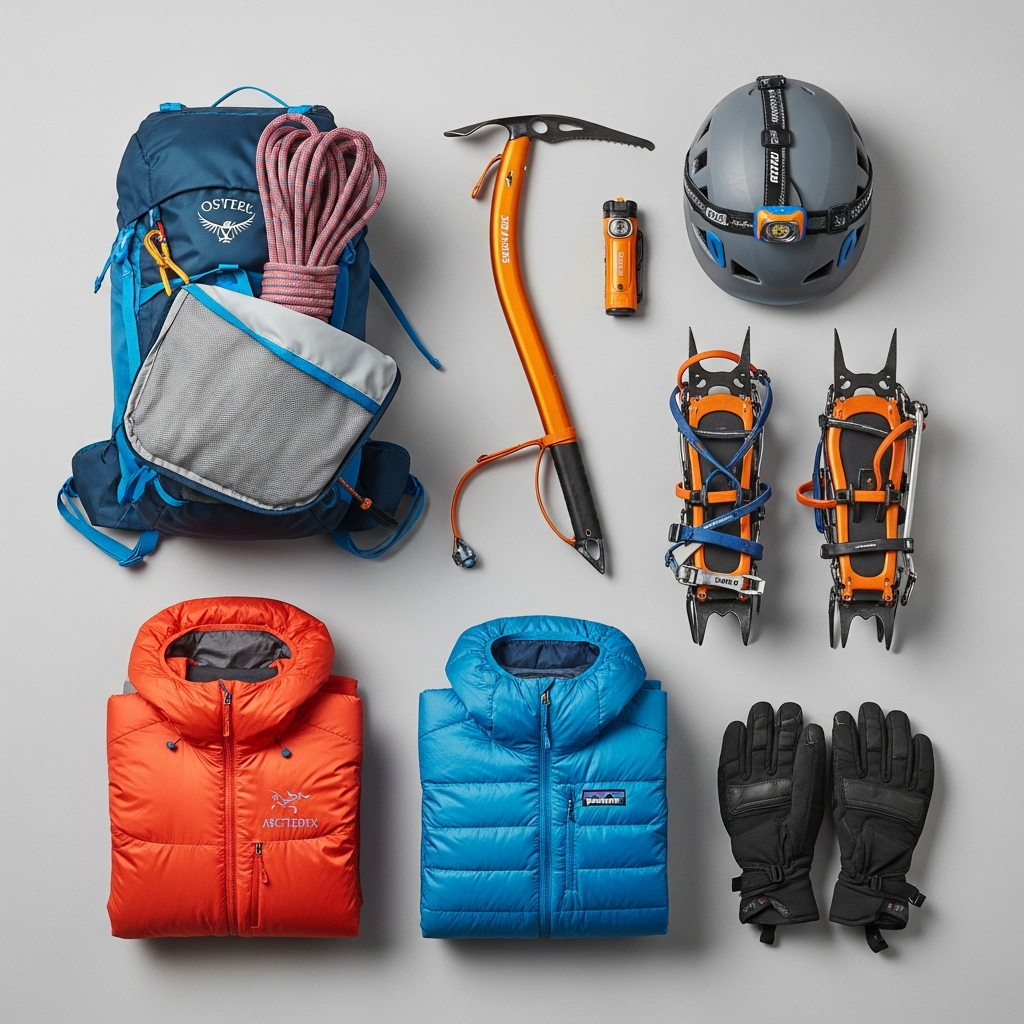
Based on verified data and real-world alpine testing, the following ice axes represent the most reliable and efficient tools available this year.
1. Petzl Sum’Tec – Best Overall
PETZL Sum’Tec Ice Axe Adze, Modular ice Axe for Technical Mountaineering
⭐️ 4.5/5
🔥 Key Feature: A fully modular head system paired with an on-the-fly, tool-free adjustable Trigrest handrest.
- Tool-free adjustable Trigrest for instant grip changes
- Fully interchangeable modular head system
- Balanced swing weight suitable for steep ice and self-arrest
- Heavier than minimalist ski-mountaineering options
- Higher cost compared to basic walking piolets
The Petzl Sum’Tec offers exceptional versatility for 2026 alpine objectives. Alpinists regularly encounter varying terrain, requiring swift transitions from low-angle glacier travel to vertical ice bulges. The core advantage of the Sum’Tec is its tool-free adjustable Trigrest. Climbers can slide the handrest up the shaft to use the axe as a traditional walking cane or lock it down near the spike for secure, technical swings. Paired with a fully modular head that accepts various picks and adzes, this tool adapts smoothly to changing route conditions without requiring gear swaps.
2. Black Diamond Venom LT Tech – Premium Choice
Black Diamond Equipment Venom Lt Tech Piolet – Envy Green – 45 cm
⭐️ N/A/5
🔥 Key Feature: Extreme ultra-lightweight engineering featuring a forged aluminum head and swappable Hot-Forged Tech Pick.
- Ultra-lightweight construction reduces carrying fatigue
- Replaceable Hot-Forged Tech Pick for aggressive bite
- Curved shaft improves clearance on technical terrain
- Aluminum head is less durable against bare rock impacts
- Low overall mass requires precise swing technique
As a highly anticipated release gaining immediate traction in 2026 alpine circles, the Black Diamond Venom LT Tech focuses entirely on fast-and-light efficiency. When the objective demands minimal weight, this axe delivers by utilizing a forged aluminum head to strip unnecessary bulk. Combined with a sharp, swappable Hot-Forged Tech Pick, it provides the necessary bite for steep snow and ice. This tool excels in rapid alpinism where minimizing load dictates overall climbing speed.
3. Petzl Gully – Best Budget
PETZL Gully
⭐️ 4.4/5
🔥 Key Feature: Hyper-compact minimalist construction weighing merely 280 grams for ultimate stowability.
- Weighs only 280 grams
- Highly packable 45cm length fits inside standard climbing packs
- Tapered steel pick penetrates hard snow effectively
- Too short to provide walking support on low-angle terrain
- Lacks the weight required for effective step-chopping
For ski mountaineering or early-season couloir climbing, the Petzl Gully is a highly practical choice. This compact, budget-friendly axe measures just 45 cm and features an integrated micro-Trigrest. Weighing 280 grams, it stores easily inside a backpack during long approach trails where a full-sized axe would be cumbersome. While it is not intended for sustained vertical ice climbing, it provides excellent security for steep snow climbing and emergency self-arrests without adding significant weight to your kit.
4. CAMP Cassin X-All Mountain – Best for Technical Ice
CAMP Cassin X-All Mountain Hammer
⭐️ 5.0/5
🔥 Key Feature: Perfectly balanced swing dynamics and aggressive precision pick designed to eliminate ice-shattering.
- Engineered swing balance reduces forearm fatigue
- Dual-density ergonomic grip improves handling
- Customizable pommels accommodate various glove thicknesses
- Design is too aggressive for basic glacier walking
- Heavier profile than standard piolets
Climbers facing sustained north faces and technical ice pitches rely on the specific geometry of the CAMP Cassin X-All Mountain. The 2026 iteration utilizes next-generation precision picks crafted to penetrate brittle glacier ice cleanly, reducing the chance of shattering the surface. Its dual-density grip is designed to minimize pump on long vertical sections, and the customizable pommels allow climbers to adjust the handle fit based on their preferred glove system. It is a purpose-built tool for challenging vertical environments.
5. Grivel Air Tech Evolution – Best Classic Mountaineering Axe
Grivel Air Tech EVO Ice Axe – Classic Mountaineering Axe with Hot-Forged Steel Head and G-Bone Shaft – Without Leash
⭐️ N/A/5
🔥 Key Feature: Proprietary aerospace-grade G-Bone shaft combined with Grivel’s signature hot-forged steel head for maximum structural rigidity.
- Hot-forged, one-piece steel head ensures long-term durability
- G-Bone shaft offers a secure, ergonomic grip along the entire length
- High structural rigidity supports reliable self-arrest maneuvers
- Straighter shaft limits swing clearance on vertical ice
- Leash must be purchased separately
The Grivel Air Tech Evolution remains a foundational piece of classic mountaineering equipment. Recently restocked for the 2026 season, the EVO iteration features Grivel’s aerospace-grade G-Bone shaft. The lateral grooves running down the handle increase structural rigidity and provide a textured grip, ensuring secure handling even when wet. Combined with a hot-forged, one-piece steel head, it performs exceptionally well during standard glacier crossings, step-cutting, and critical self-arrest procedures.
How to Choose the Right Alpine Ice Axe
Selecting an axe depends directly on your planned mountain objectives. If your route consists primarily of rock scrambling with short snowfield crossings, a minimalist option like the Petzl Gully reduces pack weight. Conversely, climbing sustained 60-degree ice requires the shaft clearance and head weight found in models like the CAMP Cassin X-All Mountain. Before establishing basecamp, ensure your overall recovery strategy is sound. Upgrading your camp setup with gear from our Top 7 Lightweight Camping Chairs for Backpacking can improve rest periods between summit pushes.
Pick type is another critical variable. Classic picks feature a gentle curve designed for smooth self-arrests in firm snow, while technical picks utilize an aggressive reverse curve engineered to hook securely into vertical ice. Modular axes, such as the Petzl Sum’Tec, offer the distinct advantage of swapping pick types based on the specific requirements of each expedition.
Frequently Asked Questions
What length ice axe is appropriate for alpine climbing?
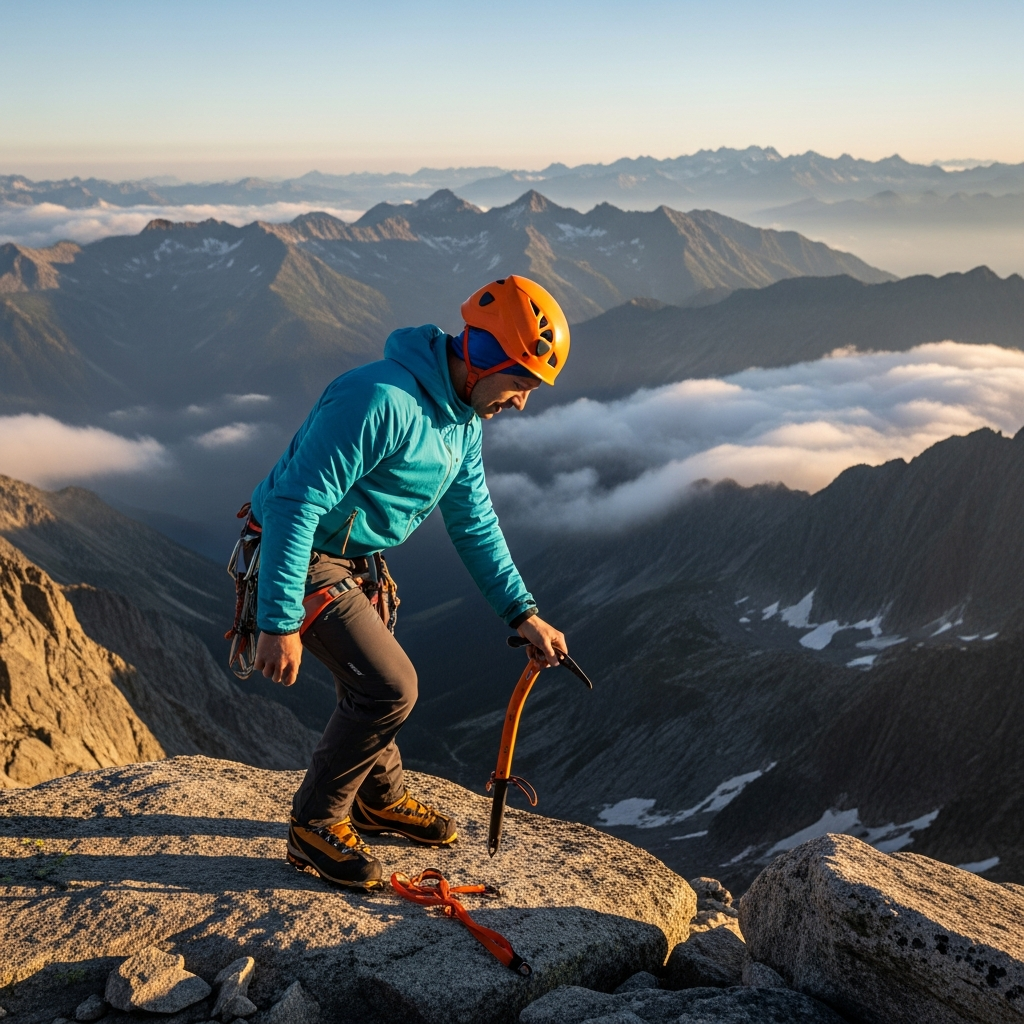
For the 2026 season, the general preference continues to lean toward shorter, more maneuverable axes. For standard mountaineering, sizing usually dictates that when holding the axe by the head with a relaxed arm, the spike should align between your mid-calf and ankle. However, for technical alpine routes and steep couloirs, climbers typically prefer axes between 45cm and 50cm, as they swing more efficiently and avoid snagging on the slope during upward progression.
Is an ice axe leash strictly necessary?
Leash requirements vary based on the terrain. During classic glacier travel, a wrist leash prevents accidental loss of the tool into a crevasse. On technical alpine routes requiring frequent hand-switching, traditional wrist leashes often become restrictive and pose a hazard. Consequently, many modern alpinists now utilize an umbilical-style elastic tether connected directly to their climbing harness.
How does climbing technique transfer from rock to ice?
Many alpinists develop their fundamental movement skills on rock before transitioning to glaciated peaks. The core principles of weight distribution and precise footwork are highly transferable. If you are refining your rock technique prior to alpine ascents, consult our guide to the 7 Best Budget Climbing Shoes Under $100. Solid rock climbing mechanics directly improve efficiency and balance when wearing crampons and swinging an ice tool.
Route Preparation and System Integration
An ice axe functions as an extension of your arm in technical alpine environments. Whether utilizing the modular adaptability of the Petzl Sum’Tec or relying on the proven durability of the Grivel Air Tech Evolution, matching your tool’s specifications to the route’s demands is a critical safety consideration. Hardware alone does not guarantee a safe return; preparation must cover all scenarios. Always pack reliable emergency provisions, such as items from our Top 10 Best Freeze-Dried Survival Food Kits for 2026, as alpine weather systems can stall descents unexpectedly. Focus on system integration, evaluate conditions objectively, and climb efficiently.